
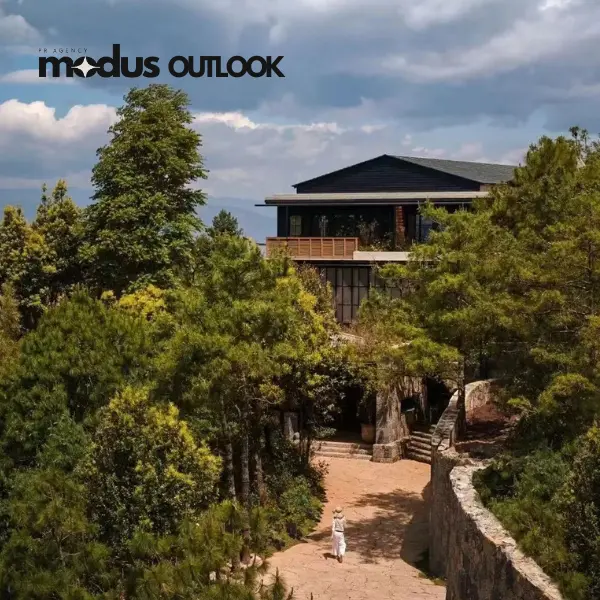
A travel creator stayed at your hotel last month. Her Reel generated 40,000 views. A Story captured the sunset by the pool. The comments were filled with “I need to go” and “Adding this to my list.”
But when the team asks, “How many of those views became bookings, visits, or F&B spend?” the answer is often unclear.
There is no dedicated link, no redemption code, no source marker in the booking system, and no reliable path connecting the content exposure to an actual guest action.
This is the central problem facing many hotels today: they have acquired influencer content without designing a conversion mechanism.
Influencer marketing should not stop at reach, follower growth, or attractive assets. Hotels need to know whether the content reached the right audience, showed a specific experience, created a reason to act, and produced results that can be tracked and improved.
The Gap Between Creator Posts and Hotel Bookings
Influencer marketing only creates commercial value when it is engineered to do so.
A travel creator with a national audience may deliver significant awareness. A smaller creator with a highly localised audience, a strong weekend-travel community, or a specific interest in wellness, design, or gastronomy may generate more qualified enquiries and bookings.
The difference is not simply follower count. It is the combination of audience relevance, experiential proof, and a designed path to action.
Hotels should first distinguish between three kinds of creator relationships:
1.Organic UGC: a guest shares an experience voluntarily, without a brief or compensation;
2.In-kind collaboration: the hotel provides a room night, meal, or experience in exchange for agreed content;
3.Paid partnership: the hotel contracts a creator for defined deliverables, timelines, usage rights, and compensation.
These models carry different costs, disclosure requirements, rights, and attribution potential. Treating them as one category makes it difficult to understand which content is genuine advocacy, which is contracted delivery, and which can be reused in future campaigns.
Define the relationship before defining the measurement.
UGC or Paid Partnership? Start with the Objective
True UGC is created by a guest because the experience prompted them to share. It can carry strong authenticity and community trust, but the hotel cannot assume control over timing, format, messaging, or long-term usage rights.
Once a hotel provides a complimentary stay, meal, or experience in exchange for coverage, a material relationship exists. Whether the value is exchanged through cash, accommodation, or product, the collaboration should be disclosed clearly and usage rights should be agreed in advance.
The models serve different purposes:
•UGC is useful for: social proof, destination conversation, and organic brand credibility;
•Paid partnerships are useful for: defined deliverables, dedicated links or codes, negotiated usage rights, and measurable KPIs.
If the goal is awareness, organic advocacy may be a valuable asset. If the goal is to generate 80 traceable room-night bookings or restaurant reservations within 30 days, the campaign needs a structured partnership, a trackable path, and a clear attribution model.
The collaboration model should match the business outcome, not the creator’s fame.
For Hotels, Audience Geography Often Beats Follower Count
Hotels are destination-dependent businesses. Unless a property is itself a national travel destination, where a creator’s audience lives may matter more than how many followers they have.
A national creator with one million followers may create significant awareness, but only a small proportion of that audience may be able or willing to visit the property’s destination. A creator with 10,000 to 100,000 followers concentrated in a target city or feeder market may deliver a much higher share of qualified attention.
Hotels should review:
•Audience location and priority feeder markets;
•Audience age, travel behaviour, and interests;
•Whether engagement is genuine and conversation-led;
•The creator’s understanding of the destination;
•Alignment between the creator’s aesthetic and the hotel’s brand world;
•The quality of action-oriented content in previous partnerships.
A portfolio of creators can also reduce concentration risk. Rather than placing an entire campaign budget behind one large account, hotels can work with several creators across different experience themes: destination discovery, F&B, family travel, wellness, design, or events.
The creator mix is part of the hotel’s audience strategy.
What Actually Turns a Post into a Stay?
Influencer content is more likely to drive bookings when three conditions come together:
1.Audience overlap: the viewer can realistically reach the destination;
2.Experiential proof: the content shows a specific, tangible experience rather than simply saying that the hotel is beautiful;
3.A reason to act: the viewer knows what to do next and why to do it now.
The third element is where many hotels fall short.
“Come and experience it” is not a conversion mechanism. More effective options include:
•Seasonal rooms, menus, or experiences with a defined availability window;
•Hotel packages connected to festivals, exhibitions, concerts, or sporting events;
•Creator-specific room, dining, afternoon tea, or wellness benefits;
•Trackable booking links, landing pages, or dedicated codes;
•Clear deadlines such as “available until Sunday” or “limited to 50 redemptions”;
•A content series built around a real creator experience rather than a single check-in post.
Hotels should work backwards from the desired outcome. Instead of setting an objective to “increase awareness,” define a target such as 300 link clicks, 40 restaurant reservations, or 20 weekend-stay redemptions within two weeks.
Once the objective becomes concrete, the brief, offer, format, and measurement system can work together.
Do Not Invite Creators Only for “One Night and One Post”
A one-off stay can produce content. A more valuable relationship is often built around a themed experience with a clear narrative.
Three formats can create more depth than a simple complimentary-stay arrangement:
1. Small-scale destination experiences or tastings
Invite a curated group of creators with different perspectives to experience the rooms, F&B, design, wellness offering, or surrounding destination at the same time. A shared theme creates concentrated but varied storytelling.
2. An ongoing creator relationship programme
Instead of sourcing a new group of unfamiliar accounts every month, build a stable network of creators. Repeated exposure to seasonal changes, new menus, and service details allows creators to develop genuine understanding of the hotel.
3. A co-created experience
This could be a destination breakfast route, a neighbourhood map, a limited-edition drink, or a weekend wellness ritual. When creators have real ownership, their storytelling is more likely to sound natural rather than like a repetition of hotel collateral.
The objective is not to turn creators into advertising copywriters. It is to give them clear brand boundaries while preserving the voice that made their content credible in the first place.
What Should an Effective Creator Brief Include?
A one-page brief can create clarity without turning the collaboration into a script.
It should cover:
•The campaign objective;
•One or two experiences the hotel wants the audience to remember;
•Required scenes or proof points;
•Content formats and quantities;
•Platforms, posting dates, and deadlines;
•Dedicated links, codes, or calls to action;
•Disclosure requirements;
•Brand restrictions, privacy, and guest-filming boundaries;
•Content usage rights, paid-media rights, and duration.
Hotels should be clear about what cannot be compromised while giving creators room to decide how to tell the story. Over-scripting usually reduces credibility and weakens performance.
For paid or in-kind collaborations, contracts should also define deliverables, timelines, revision rounds, compensation or benefits, cancellation terms, and whether the hotel can use the content on its website, owned channels, or paid media.
If a post performs well, it is usually too late to negotiate usage rights afterwards.
Measure Influencer Marketing Beyond Reach
Reach and follower growth can indicate scale, but they do not prove business impact.
More meaningful indicators include:
•Dedicated link clicks;
•Code or offer redemptions;
•Room-night bookings, restaurant reservations, or experience purchases during the campaign;
•Booking-page conversion rate;
•Change in demand compared with a comparable period;
•Direct enquiries that can be tagged and connected to the campaign;
•Repeat visits and membership conversion;
•The performance of creator content when reused across owned and paid channels.
Each creator, experience, and campaign period should use a distinct link or code wherever possible. This enables the hotel to understand which creator, platform, offer, and content format generated action.
The key question is not “How many views did the post receive?” It is:
How much qualified demand did the collaboration generate, what did each qualified action cost, and how many guests ultimately booked, visited, and returned?
From One Influencer Collaboration to a Sustainable Hotel Brand Asset
The next stage of hotel influencer marketing is not simply finding more followers. It is creating a clearer exchange of value and a more complete path from discovery to booking.
Creators can deliver three distinct forms of value:
•Reach: putting the hotel in front of a relevant audience;
•Trust: reducing the decision barrier through credible experience-led storytelling;
•Conversion: connecting interest to booking and visitation through a specific offer and trackable path.
These outcomes may not come from the same creator, and they should not be measured by the same metric.
For hotels, effective influencer marketing is not “invite a large account to post a beautiful image.” It is a system that connects creator selection, experience design, briefing, offer architecture, disclosure, rights, and attribution.
When every collaboration can answer who was reached, what was shown, what action was encouraged, and what business result followed, influencer marketing moves from a one-off purchase of attention to a meaningful part of hotel brand building and commercial growth.
The best creator collaboration does not simply make more people see the hotel. It gives the right people a reason to stay.
Ready to elevate
your brand?
Let’s discuss how Modus PR can transform your communications strategy.
REQUEST A DEMO