
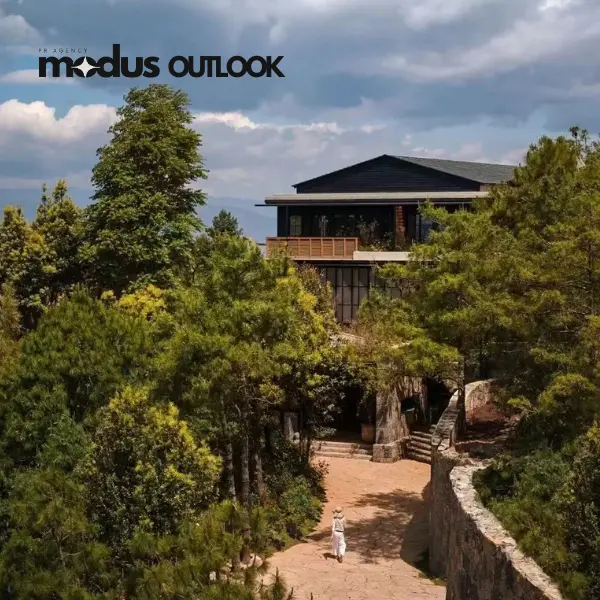
When hotels manage Instagram, it is easy to fall into a familiar loop: produce more polished photography, publish more Reels, follow trending audio, and wait for the algorithm to deliver growth.
When a competitor’s follower count rises faster, teams often respond by copying its visual language, repeating the same formats, or blaming the platform.
But Instagram is not one algorithm waiting to be outsmarted. Feed, Explore, Reels, Stories, and other surfaces serve different user behaviours and distribution patterns. More importantly, the platform increasingly rewards content that is watched, shared, discussed, and experienced as human—not content that is simply polished but emotionally empty.
For hotels, the more useful question is not “How do we beat the algorithm?” It is:
Are we building the hotel as a destination community worth following, sharing, and returning to?
Organic growth does not mean refusing paid media or partnerships. It is the long-term capability to create valuable content, build community relationships, learn from data, and make the brand discoverable.
Here are five strategies to help hotels move Instagram from an online brochure to an active part of the guest experience.
First, Understand Instagram as Multiple Content Environments
Hotels should assign a clear role to each surface instead of duplicating one post everywhere.
| Instagram Surface | Primary Role | Hospitality Examples |
|---|---|---|
| Feed photo / carousel | Establish the brand world and useful information | Architecture, destination routes, F&B guides, room stories |
| Reels | Reach non-followers and convey movement | Arrival moments, chef craft, neighbourhood walks, service details |
| Stories | Build immediacy and relationships | Polls, countdowns, behind-the-scenes, guest questions |
| Broadcast channels | Keep high-intent audiences informed | New menus, member benefits, limited experiences, event updates |
| Collab Posts | Connect creators, partners, and adjacent communities | Artists, restaurants, designers, tourism organisations |
The Feed can help people understand the brand. Reels can help them feel the experience. Stories can invite participation. Direct messages and community touchpoints can move interest toward action.
Growth is not about publishing more in every space. It is about giving every space a job.
Five Organic Instagram Growth Strategies for Hotels
1. Choose Quality Over Quantity
Publishing more frequently does not automatically create better growth. For a hotel, quality is not only about premium production. It is about whether the content offers a clear experiential value: does it inspire, inform, create emotion, or make someone want to send it to a specific person?
Evaluate every post through four questions:
•What specific experience does it show? Not simply “luxury,” “relaxation,” or “unforgettable”;
•Who is it for? Business travellers, families, couples, wellness guests, or destination explorers;
•What does the viewer gain? Inspiration, a route, useful knowledge, emotion, or a reason to act;
•Would a real person share it? Or does it feel like an isolated advertising image?
What Quality Looks Like in Hospitality
Instead of posting a sequence of unconnected room images, create a carousel titled:
“How to begin discovering this city from the hotel.”
The first slide establishes the idea, followed by a morning coffee ritual, a neighbourhood walk, a local restaurant, and the return to the hotel at night. The property is still present, but it becomes a gateway to destination life rather than an isolated building.
For Reels, hotels can reduce empty beauty shots and include movement, sound, and people: how a concierge builds an itinerary, how a chef selects ingredients, or how a guest experiences the first 30 seconds after arrival.
Polished visuals make people pause. Specific experiences make them stay.
2. Turn Followers into Insiders
Hotels should not treat Instagram as a broadcast channel. Long-term growth comes from making followers feel that they are participating in the brand rather than merely receiving brand messages.
Being an insider does not require a complex membership system. It can mean:
•Seeing a new menu or room concept before the public;
•Voting on the theme of a future afternoon tea;
•Viewing details of a design process that has not yet been revealed;
•Asking the concierge a destination question;
•Receiving access to a limited booking window or experience;
•Joining a conversation between the hotel and a local artist, chef, or community partner.
Stories are a natural entry point for this relationship. Polls, questions, sliders, countdowns, and links can turn passive viewers into participants.
But the important part is not how many stickers the hotel uses. It is how seriously the hotel responds to the signals that follow. A question about accessibility, family services, dietary requirements, or local transport is not just a social interaction. It is part of the guest experience.
For hotels, community management is the front end of digital guest relationship management.
3. Plan Strategic Collaborations Instead of Chasing the Biggest Account
Collaborations with creators, restaurants, airlines, cultural institutions, designers, and destination partners can extend a hotel’s reach. But a collaboration should not simply mean inviting a large account to stay and publish one image.
A stronger collaboration begins with three questions:
1.Who do we want to reach? Local weekend guests, international travellers, wellness audiences, families, or people interested in design and culture;
2.What do we want people to remember? The space, F&B, service, destination connection, or a time-sensitive experience;
3.What should people do next? Learn more, save a route, book a restaurant, join an event, or make a reservation.
Potential formats include:
•Co-creating a neighbourhood day route with a local creator;
•Exploring the design story with an architect or artist;
•Following a chef from the local market to the dining room;
•Developing an ongoing recovery, sleep, or wellness series with an expert;
•Creating cross-brand content with a cultural institution or destination partner;
•Using Instagram Collab Posts to reach both communities.
Audience relevance and credibility often matter more than follower count. Hotels should also define disclosure, timelines, usage rights, and conversion paths before the collaboration begins.
A strong collaboration does not simply place the hotel in someone else’s audience. It co-creates an experience worth entering.
4. Use Instagram Insights to Understand Guests, Not Just to Fill a Monthly Report
Data should not be limited to an end-of-month dashboard. It should help the hotel refine topics, openings, pacing, and tone continuously.
In addition to follower growth and likes, hotels should monitor:
•The share of reach coming from non-followers;
•Reels watch time and completion behaviour;
•Carousel saves;
•Sends and shares;
•Story exits, replies, link clicks, and sticker interactions;
•Profile visits and clicks to booking or website pages;
•The types of questions arriving through direct messages;
•Growth among local and priority feeder-market audiences.
These metrics answer different business questions:
•Watch time: Did the opening create enough interest?
•Saves: Is the content useful for travel planning?
•Sends: Is the viewer passing it to a travel companion or potential guest?
•Direct messages: What are guests still uncertain about?
•Profile and link clicks: Did interest progress toward brand discovery or booking?
Hotels can create a simple monthly testing rhythm. Change one variable at a time—opening, length, cover, narrative angle, or call to action—and observe several comparable posts before changing the whole strategy.
Data is not there to prove that content succeeded. It is there to reveal what guests are looking for.
5. Treat Instagram as a Search Entry Point, Not Only a Feed
Travellers increasingly use social platforms to discover hotels, destinations, restaurants, and experiences. Hotel content needs to be discoverable not only in the feed, but also when someone actively searches.
Hotels should deliberately optimise:
•Account names and bios with destination and property context;
•Captions that naturally describe the city, neighbourhood, experience, and service;
•On-screen text in Reels and carousels;
•Location tags;
•Specific language around destination, F&B, wellness, design, and travel occasions;
•Alt text and accessibility information;
•Consistent but non-repetitive themes across content series.
“Luxury hotel in the city” says very little. “A design-led hotel for slow weekends in Shanghai’s former French Concession” communicates where the property is, who it is for, and what kind of experience it offers.
For hotels operating across markets, search behaviour should also be considered across Instagram, Xiaohongshu, Douyin, WeChat, and other relevant platforms. One set of English or Chinese keywords should not be copied mechanically everywhere.
Search optimisation is not a keyword list. It is a clearer articulation of what the hotel is, where it is, and why it deserves consideration.
Organic Growth Does Not Mean Never Using Paid Media
Organic growth is often misunderstood as refusing to invest, collaborate, or use media resources. In practice, it refers to discovery, engagement, and sharing generated by the content and community itself.
For hotels, paid and organic can strengthen each other:
•Use organic content to test which experiences earn saves and shares;
•Put paid support behind content with demonstrated relevance;
•Use creator collaborations to extend credible reach;
•Bring user-generated content into owned channels;
•Connect attention to the website, booking path, membership system, and on-property experience.
Paid media cannot replace content quality. If a post lacks a specific experience, a credible voice, or a meaningful next step, adding budget only scales its inefficiency.
The goal is not to choose between organic and paid. It is to create a connected path from content testing and community interaction to commercial action.
A 30-Day Organic Instagram Framework for Hotels
Week 1: Define the Role of the Brand
•Identify three to five distinctive experience themes;
•Build content entry points for priority guest segments;
•Review the account bio, location, and service information;
•Assign clear roles to Feed, Reels, Stories, and direct messages.
Week 2: Build Repeatable Content Series
•Create a destination series;
•Create a people-led series featuring staff, chefs, designers, or local partners;
•Create a saveable utility series;
•Create a community interaction series.
Week 3: Activate Partnerships and Participation
•Approach three to five creators or destination partners with audience relevance;
•Publish one Collab Post;
•Run a Q&A or poll through Stories;
•Turn recurring audience questions into the next content series.
Week 4: Review and Scale What Works
•Compare watch time, saves, shares, and clicks across formats;
•Identify the experience themes with the strongest potential;
•Turn strong posts into repeatable series rather than one-off hits;
•Connect high-quality content to the website, booking journey, membership, and on-property experience.
Conclusion: What Hotels Are Really Building on Instagram
There is no permanent shortcut to organic Instagram growth. Platforms change, audiences change, and travel decisions change.
Hotels can, however, continue to control a few durable principles:
•Create content around real and specific experiences;
•Invite followers to participate rather than simply watch;
•Work with partners who genuinely understand the target audience;
•Use data to understand guests rather than chase vanity metrics;
•Make content searchable, saveable, shareable, and connected to a booking path.
A hotel’s Instagram should be more than an online gallery of rooms, pools, and plates. It can be a gateway to a destination, the front end of guest relationships, and a reflection of how the brand understands contemporary travel.
Organic growth is not about making more people see the hotel. It is about helping the right people remember why they should stay there next.
Ready to elevate
your brand?
Let’s discuss how Modus PR can transform your communications strategy.
REQUEST A DEMO